Monday, October 7, 2013

October. Breast Cancer Awareness Month, or.....The Month of Love!

I am so at peace with myself because of my personal involvement with breast cancer awareness. I strive everyday to get the word out about those who have succumbed to this dread as well as those who are currently fighting. But the fight has only begun. I can't believe how much we are hearing, and learning, about the possible breakthroughs in understanding this disease. The more we understand it, the better equipped we are in controlling and, soon, the annihilation of breast cancer.
Our world that we take for granted, I truly believe, holds the key to not only breast cancer, but other types of cancer and sicknesses. Something as simple as going out in the sun and picking a quart of blueberries is a great example. The better you feel about yourself, as well as the stress relieving action of enjoying life, the better equipped you are emotionally to deal with whatever is thrown your way.
If you were to go outside in the sun for just 10 minutes, you would soak up almost 5000 IU of vitamin D. Now I know that by not using sunscreen and getting more than 2-3000 IU per day would be harmful in other ways, high levels of vitamin D and calcium may offer some protection against the most aggressive type of breast cancer, but has shown to only be beneficial to premenopausal women.
Then when you sit down to enjoy natures blueberries, that's when you are rewarded again!(read below under blueberries) Blueberries are on everyone's list of superfoods, cancer-fighting superfoods to be exact. But let me back up just a tad.

When you read the following history and thoughts about breast cancer, it is remarkable that in many ways, breast cancer is treated much as it was many hundreds of years ago. On the other hand, our knowledge, which eventually will lead to a cure, is leaps and bounds more profound when it comes to understanding both friend and foe of this pink ribbon affliction than once was.


The Edwin Smith Papyrus is the oldest known treatise on bodily trauma, including the treatment of breast cancer. It describes 48 traumatic injuries to a human body and how to properly treat them. FYI, did you know that this papyrus is the first manuscript to mention the word 'brain'?
Anyway, some think it may have been written much earlier then the accepted date of 1500 B.C., and "re-scribed" at a later date. With regards to breast cancer, it tells the reader to cauterize the spot where the tumor was "palpable".


A thousand years later, Hippocrates mentions that the excess of black bile in any part of the body would produce cancer. At the time, it was widely accepted that the body was composed of four fluids: blood, phlegm, yellow bile and black bile. In ancient Egypt, cancer was thought to have been caused by the Gods, which is why their treatment involved magic spells and talismans.


About 200 A.D., Galen describes cancer as an excess of black bile as well, but further states that some cancers are more dangerous than others. He opted to use opium, sulphur, licorice and other ointments for the relief and cure for cancerous tumors.

So in almost 2000 years, advancement of understanding and treating breast cancer was slow and still not completely understood. But this is to be expected without advancements in equipment in which to look at cancer on a genetic or molecular level.

In 1680, a certain French physician by the name of Francois de la Boe Sylvius thought that black bile excess was not the culprit, but that the lymphatic system was to blame, with another French doctor going even further by offering that certain glands and nerves, when mixed with lymph vessels, caused cancerous tumors.

It seems as though cancer research was heading in the right direction until a few other doctors and "learned" men in the early 18th century, began to argue that breast cancer was caused by a lack of sex, while others said it was the severity of the sex act alone, that caused this disease. Curdled milk, mental disorders, childlessness and idleness were also being tossed into the cause and effect arena during this time.
It wasn't until the mid-1750s that Henri Le Dran, another French doctor suggested removing the lymph nodes up into the armpits, along with the tumor, would treat breast cancer. This option, however, was not(as far as this author has determined) utilized during this time because of the lack of proper medicine for sedation, but it was attempted by two other French physicians about 1750.

In the early to mid-19th century, surgery was becoming an option for the removal of tumors and lymph nodes because of the understanding of antiseptics and anesthesia. By 1882, when the first radical mastectomy was performed by William Halstead. But the one downfall to this procedure was that more often than not, both breasts were removed instead of just the diseased one. But this form of treating breast cancer would be barely altered for the next eight or nine decades. Even until my mother dies, she underwent a radical mastectomy in 1978. I remember Mom saying that it was her choice to have it done because many women were choosing not to have such a body disfiguring procedure. The disfigurement involved the chest area as well as swelling and pain even after the mastectomy.


It wasn't until 1976 that radiation or chemotherapy was recognized as an alternative to mastectomy, so that by 1995, less than 10 percent of breast cancer patients opted for a mastectomy.

Now the good news. Did you know that some studies show that a third of all cancers, including breast cancer, are linked to a poor diet? When I mention a poor diet, I don't mean junk food or the obvious snacking done late at night. I mean the intake of cancer-fighting foods were being neglected. Although there may be correlating data linking a high-fat diet to aggressive types of cancer, it is far more important to alter your eating habits to fight this disastrous enemy and antioxidants are the number one line of defense. In addition to their fill of nutrients, antioxidant rich foods are able to kill free radicals that occur as a result of our digestion. These free radicals cause cell damage if not kept under control, so consider the foods listed below as the neighborhood posse.

The Yankee Chef has compiled a list of the top ten super foods that are the highest in the  cancer-fighting army. I am not telling you to overindulge. Simply keep these foods in mind when you are shopping. Regardless if you are a survivor or currently battling this affliction, do what you can to jump on the "love myself" bandwagon!


1. Wild Blueberries. With 1 cup of these berries, you are packing away over 13,500 total antioxidant capacity. Many lists will have you believe that red beans are higher than the blueberry but this is a misnomer. The most prolific red bean, the red kidney bean or pinto bean yields less capacity than does the wild blueberry.
At the Beckman Research Institute in California, researchers applied blueberry extracts to very difficult cancer cells(triple-negative) and found that after six weeks, the mice that received the extract had tumors that were almost three-quarters smaller than the size most often associated with this particular type of cancer.
Ranking the highest of any food to destroy those pesky free radicals, they also contain caffeic acid, catechin, chlorogenic acid, epicatechin, ferulic acid, gallic acid, kaempferol, myricetin, maringenin, p-coumaric acid, p-hydroxybenzoic acid, pterostilbene, resveratrol, quercetin, and ursolic acid, many of which reportedly having anti-cancer properties.

                                    Yankee Red Beans and Rice(courtesy of theyankeechef.com)

2. Red Beans, including kidney and pinto. Having the antioxidant capacity of between 11,000-13,230 for a half-cup, these little gems are a machine when it comes to fighting breast cancer. Red chili bean and the Mexican red bean are the highest of all red beans when it comes to anthocyanins, an antioxidant component. By incorporating these beans in soups, salads and entrees, you are getting the benefit of anthocyanin in the great numbers. If you want a little less of that starchy flavor, try Adzuki and kidney beans. Just remember that not all beans are high in antioxidants. Most of the health benefits of beans(as other fruits and foods) come from their coloring, much the same way beta-carotene which gives the carrot it's orange color or the lycopene in the tomato. The brighter the color or darker the hue, the more valuable its' cancer-fighting nutrients are.


3. Blueberries-cultivated. With a 1-cup serving containing over 9,000 total antioxidant capacity, it was found that out of 10 different berry extracts, the flavonoids of the blueberry decreased the proliferation of breast cancer cells, inhibits mammary caner cell proliferation in mice and also inhibiting cultured cancer cell growth int he laboratory. . Did you know that blueberries also contain a good source of resveratrol? Resveratrol has been shown to increase the effects of radiation, aromatase inhibitors and Taxol, a chemotherapy drug.

                                          Cranberry Kisses(courtesy of theyankeechef.com)

4. Cranberries. At almost 9,000 per one cup of whole cranberries, how can you just enjoy these fruits only at Holiday time?


5. Artichokes. At almost 8,000 per cup of hearts, cooked artichokes have three different cancer-fighting molecules. A phytochemical found in artichokes has been found to interfere with estrogen receptors and also inhibits inflammation of certain cancerous growths. 


Find, below, another list of the best cancer-fighting foods universally recommended for the annihilation of free radicals. Although their numbers will not correspond with the above foods, their fierce fighting style is just what the body needs to overcome free radicals.


Broccoli/Brussel Sprouts. Usually referred to as a super foods when it is mentioned along with breast cancer with the highest amount of isothiocyanates. The isothiocyanates detoxify and fight cancer to the bitter end. Other foods that belong in this category are watercress, white and red cabbage*, kale, kohlrabi, horseradish, cauliflower and bok choi.


Garlic. Garlic is loaded with allyl sulfur, a compound that fights breast cancer by reducing the risk of cancer cells to begin with. Garlic also continas allicin, which is one of the most potent antioxidants found in Mother Nature. Onions also contain these antioxidants, but in a smaller scale. Make sure if you are using fresh garlic cloves, always let it rest a few minutes after peeling and chopping to allow these compounds to fully form.

Beta-Carotene. I know, not a food group but I made this decision based on a food group. Carrots, pumpkin, apricots, peppers, and various bright orange fruits and vegetables contain carotenoids(with beta-carotene being one) which has been shown to neutralize free radicals. Beta-carotene has the strongest muscle when it comes to any carotenoid fighting cancer. It is known that too little beta-carotene has been linked to a higher risk of breast cancer.
Another carotenoid is the fierce lycopene. This is found mainly in tomatoes(lycopene giving the tomato its' distinctive red color) and is known to hunt down and neutralize free radicals. Food for thought, so to speak, though. Fresh tomatoes do not have nearly the lycopene content as do cooked tomatoes, such as in various tomato sauces. So pile on the spaghetti sauce, and other tomato sauces, in order to fully feel the lycopene wrath.
Leafy greens as spinach as well as eggs, corn and some citrus fruits contain lutein and zeaxanthin, two types of carotenoids, that help fight cancer but in lesser form.

Mushrooms. You don't often hear of mushrooms and antioxidants in the same sentence but I will tell you that according to one research that was reported in the International Journal of Cancer, scientists found that by eating at least a third of an ounce of fresh mushrooms every day lowered the likelihood of developing a tumor by up to 64 percent, amazing!! That is because mushrooms contain linoleic acid, which has been shown to slow down the production of estrogen, which is linked to breast cancer.

Grapes, Red to be exact. I have mentioned resveratrol above under blueberries but neglected to mention that red grapes contain this powerful antioxidant as well. Green grapes are sadly lacking in the compound. Pay close attention the grape skins. this is where resveratrol is mostly concentrated, along with the seeds. So when buying grapes, enjoy the crunch and the satisfaction.


White Tea. Catechin, a flavanoid, is a powerful antioxidant. Research is being done as we speak with antioxidant compounds found in tea, but it is speculated that catechin may have an ability to fight cancer at all stages. From inhibiting development of tumors to completely completely blocking carcinogens involved in cell proliferation. Already Staph infection and E coli have been shown to be repressed in their growth when introduced to catechin. Dark chocolate and apples have catechin in much smaller doses as well.


And lastly, but not least, are oils. Taboo you say? Olive oil(as well as olives themselves), along with walnut oil, wheat germ oil and other vegetable oils contain antioxidants. Although very low in antioxidants, you don't think I would add them here unless there was another reason do you? Well, there is! These oils also help you absorb oil-soluble antioxidant vitamins on other foods. These include, but not limited to, Vitamins A, D, E and K.  Vitamin E enhances your body's ability to use Vitamins C and A and other fatty acids and is an antioxidant as well. So when you add 2 and 2, you get a higher number....understand?


* Red cabbage contain glucosinolates. Glucosinolates reduce breast cancer risk by blocking dangerous substances that can cause cell damage and tumor growth, also helping to eliminate carcinogens. Choose red cabbage with the brightest leaves and never NEVER overcook cabbage. You receive the best caner-fighting benefits by eating raw or lightly cooked. Glucosinolates are very water soluble and can be completely lost in cooking. 

                                                         As only Leonardo can paint


It is not only instrumental that we all eat well but feel well eating. As I have always said, when our minds are happy, our bodies laugh with them. Let me give you some great adages about the glory we call women. Some deep and pondering while others just may have you chuckle.

There is no such thing as an ugly woman.  ~Vincent Van Gogh

Women get the last word in every argument.  Anything a man says after that is the beginning of a new argument.  ~Author Unknown

The average woman would rather have beauty than brains, because the average man can see better than he can think.  ~Author Unknown

There is in every true woman's heart, a spark of heavenly fire, which lies dormant in the broad daylight of prosperity, but which kindles up and beams and blazes in the dark hour of adversity.  ~Washington Irving, The Sketch Book

Whether they give or refuse, it delights women just the same to have been asked.  ~Ovid

Of all things upon earth that bleed and grow,b A herb most bruised is woman.  ~Euripides, Medea


Under his forming hands a creature grew,
Man-like, but different sex; so lovely fair
That what seemed fair in all the world, seemed now
Mean, or in her summed up, in her contained,
And in her looks; which from that time infus'd
Sweetness into my heart, unfelt before,
And into all things from her air inspir'd
The spirit of love and amorous delight.
She disappear'd, and left me dark; I wak'd
To find her, or for her ever to deplore
Her loss, and other pleasures abjure:
When out of hope, behold her, not far off,
Such as I saw her in my dream, adorn'd
With what all Earth or Heaven could bestow
To make her amiable: On she came,
Led by her Heavenly Maker, though unseen,
And guided by his voice; nor uninform'd
Of nuptial sanctity, and marriage rites:
Grace was in her steps, heaven in her eye,
In every gesture dignity and love
.    ~John Milton, Paradise Lost

Saturday, September 21, 2013

"T'aint worth wrappin' 'round my fingah!"

Yup, we all have our regional dialects, some are less dominant while others are so noticeable, "they ah spurted out faster 'n we kay'ah to notice". Although many people have told me to neglect trying to cover it up, I am always(now that I have taken some national spots)trying to pronounce my R's and get rid of that nasally twang often associated with Yankee speech. To me, listening to myself on-air or through the media, I sound like a back-woods cook. Not to say I am not proud of everything I stand for as well as my ingrained speech patterns, there are just times that I wish I could simply pronounce just one R.
Regardless, take a moment and look at some of the terms and "Yankee-isms" from days gone by that your forefathers and mothers unmindfully mumbled, much the same way we pay no attention to what we say today. (Great Keezer's ghost, my Yankee-ism's are really thicker 'n fiddlers in Hell I noticed after rereading all of my posts.)


My friend, Tim Sample, is a great resource as well with regards to our way of life, speech patterns and especially Yankee humor and story telling. You can find him at http://timsample.com/, on YouTube and he has a multitude of books you can take a peek at through Barnes and Noble and other sites and stores. His resume is extraordinary and lengthy, with a stab at national exposure  many times over as well. I initially wanted Tim(and he had agreed) to write some New England stories for my cookbook, The Yankee Chef, but my editor thought the 760 pages was a tad too heavy so I am hopeful my next cookbook will contain some good ol' Yankee humor as only Tim Sample can do.


 In the meantime, enjoy these long-forgotten terms. I have included only a few of the ones I remember my Dad telling me. And as the post title says, these aren't worth wrappin' 'round my fingah, but it is nice keeping them from being furgottin'!

Caught. "The milk was "caught" before it was burned."
On the mending hand or Able to set up and eat a few porridges. A convalescent. "My grandmother is on the mending hand".
Spandy. Shortened from Spic and Span, clean.
Thatchy. If the cream cheese or milk tastes "thatchy" it was because the cow ate thatch, a long, coarse grass that prevalently grew in slat marshes of old.
up in your bean water. Agitated, angry opr simply lively.
Black as zip. Extremely black(my father used this phrase as long as I can remember)
Bluer 'n a whetstone. Sad or dejected.
Boozefuddle. Liquor
Dust yer back. To win at wrestling. "I'll dust your back if you want to wrestle."
Thick as fiddlers in hell. Very abundant
Like haulin' a hog out of a scaldin' tub. Very difficult
Herrin' choker. A Prince Edward Islander or native of any of the Down-east, Canadian provinces.
Don't know enough to lap salt. Extremely stupid
He ain't no bigger 'n a pint of cider. Very small
Prayer handles. Knees
Hot as a red wagon. Very drunk.
Slacker 'n dishwater. Very unkempt or dirty.
Slower 'n a jull-poke. Extremely slow.
Taller 'n a slackpole. Very tall.
Wee-Waw. Very loosely built or unsturdy. "That barn you raised is a wee-waw".
Jorum and Boozefuddle. A jug of liquor.
Gorim. Clumsy or foolish acting. "Jasper's kid is a mite gorim".
Cling John. A small rye cake
Last at Pea time. Hard up, desperate. "Widow Bailey has been last a pea time since her husband died".
Gander Party. A gathering of men only.
Cape Cod Turkey. Very obscure but it has come to mean any cooked, stuffed fish. It may have begun around Thanksgiving time, when some Cape Cod fishermen had a bad year fishing and could ill-afford turkey for their Holiday repast. Fish was their natural replacement, so stuffing and baking it in lieu of the turkey gave rise to Cape Cod Turkey.
Pot Luck.Originally meaning a some cabbage and corned beef, it was known as such as early as 1780. this should deter anyone from giving a Corned Beef and Cabbage the distinction of Irish origination. It is known that the Irish immigration didn't begin until over 50 years later.
Thank'ee Ma'ams. My Uncle Stan Demuth used to say that all the time as he was driving his car over a two quick hills, which in turn felt as though the inside of your stomach felt as though it was coming right up through your throat. Originally, to prevent a hilly road from being washed away in heavy rain, it was the custom long ago to make a series of barriers(little bumps similar to speed bumps of today) that would turn off any sudden current of water that may be rushing down a certain road. These barriers would give an emphatic jounce and a twist to a wagon that was descending. From the involuntary motion of the head nodding in an affirmative manner(much as you would speaking to a lady in those days) while going over these barriers gave rise to the phrase. And one would always say , "thank'ee ma'am" as you went over. 


Wednesday, September 18, 2013

Taking a Breather


   I have been so busy with my second book, judging, appearances and book signings, I have been neglecting one of my only solace-rendering past-times.....reading. So I grabbed some very old manuscripts, recipes, stories and notes that my father had written before he died and I started reading them. Then I began to think that I should add some old time dishes that our grandparents, great grandparents and ancestors used to subside on and put them online so that they will never be forgotten.
   Some of us calm our nerves and relax by watching television while others take a walk or simply sit and think. I(like my father) love to "remember when...". Even though I don't personally remember these dishes, I have made them time and time again(I truly was meant to have been born many generations ago)
    I do love to think of how my parentage were huddled in their crude cabins in the middle of Bailey Hill with only the fire from the hearth casting its illumination. I love pondering how meals must have been so comforting and satisfyingly odoriferous. Granted we would snub our noses at homemade, real butter now and using leaf or hogs lard is a serious 'no-no' now, but the flavors and aromas of real food surely calmed the rowdy children and soothed the savage husband.
   Let me give you a few old-time dishes you may or may not have heard of. Food that was the energy giver for those hard working folks. People who didn't need to exercise to stay fit, but whose exercise was their daily chores and necessities of living.

Ambrosia, ca 17th century-mid-19th century. When we think of the word ambrosia today, some type of fruit salad mixed with a dairy product and topped with coconut comes to mind. Back a few generations, ambrosia(literally meaning food of the Gods) was simply corn. Generally it was the dried and milled corn that was deemed such.
   Hasty Pudding was made with dried corn(henceforth referred to as cornmeal). And although many of us have heard of Hasty or Indian Pudding, not so many knew that it was an absolute sin for it to be the least bit lumpy. My father used to say that it was originally made with milk and eggs and a "trifle of Muscovado sugar or Portorique molasses". Brown sugar sauce was generally made to top it off, which was just melted brown sugar.
   Back in the day, Indian pudding wasn't the insipid recipe many chefs use today, but nicely stirred, well-boiled without any two particles sticking together. People, also, don't know to to classically enjoy this dish as well. A spoon should be dipped into milk before it lifts the pudding to the mouth. This keeps it from sticking not only to the spoon, but to the inside of your mouth. It was meant to be enjoyed one spoonful at a time, each bite completely separated from the next.
   And do you think the Italians were the first to enjoy polenta? No, no, no, no! Eating hot Indian or Hasty Pudding was just as often seen in our homesteads of old as was cutting it when cold and grilling it in lard the next day. It is often written that when fried in fresh butter of cows who only ate clover, this meal was fit for a king.

Milk Porridge, ca 17th century-late 19th century. First water was boiled. Cornmeal was then added through ones fingers(acting as a type of coarse strainer) and the other hand was gripping a wooden paddle, stirring as the cornmeal was added to the water. When the corn was added, and the lot stirred for a time, fresh milk directly from the cow was very slowly added. It is said that you should not add the milk until you could see your nose reflecting off the surface of the cornmeal/water mixture.

Corn Biscuit, ca 18th century-late 19th century. This was an Indian luxury, and was made with one pound of butter, one pound of sugar, ten eggs and a pint of new milk, with just enough cornmeal to mold it into thin cakes. Sound familiar? It is now known as Pound Cake!

Whitpot, ?-mid-18th century. A very thin Indian Pudding, baked in a very slow oven(low temp) so that the milk, eggs and molasses formed a jelly throughout the entire pudding.

Herring Sticks, ?-late 19th century. From mid-May to mid-June, the herring run was on in all of New England in days gone by. Many old texts referred to Cape Cod herring as an alewife. Often called a "poor mans fish", it was freely gifted each year by the town to each child born within the township limits. Many townships actually enacted legislation ordering just such a gift!
  The herring was so plentiful that townships were not able to eat or locally sell them, so they were shipped to larger cities. One older lady, in her journal from New Hampshire, relates "I do relish a nice fresh herring with my breakfast".
   Salting and smoking was the norm to help keep a family fed through the lean months. Before salting or smoking, however, they were strung on sticks. The sticks were for the most part whittled from cedar, stripped from the old cedar, split rail fences everyone had around their property. The cedar sticks were passed through the gills of the fish with a dozen or so strung on each. On many New England roads, the lettered signs on the fences used to read, "Herring  10 cents a stick".

Lobster Stew. Now of course many, if not all, of us have heard of Lobster Stew, but would you like to know how to truly make it the old-fashioned way? The correct way? A little trivia first. Lobster Stew was almost always accompanied with a couple of sour pickles.
   Begin with the tomalley. Saute it in an equal amount of butter in a thick cast iron skillet for 5  minutes. Add the cooked and picked lobster meat and every bit of juice that came from the cooked lobster as you were shelling it. The ratio between lobster meat and juice should be about 50-50. You don't ever, EVER, add salt or pepper to lobster stew! Old cooks and housewives used to relate that lobsters got plenty of salt and seasoning from the ocean it lived in. I tend to agree!!
   Leave this stew on a hot fire for 5 minutes, then push it back to a cooler part of the stove to come down from boiling to a bare simmer for about 15 minutes. While still barely simmering, slowly(and they did mean SLOWLY) add your milk. Housewives say to "trickle" the milk into the stew, while constantly stirring. Add  rich cream after the milk has been added. When the stew blossoms out suddenly into a rich salmon pink under your spoon, you can know that the stew has been made properly and is now to remove from all heat sources and let cool for a hours . My father used to say that cooling the stew was just as important as making it. The flavor increases drastically. True lobster stew wasn't meant to be consumed when it is made, but rather cooled for many hours then reheated to enjoy.  As if.....

Muslin Toast, 18th century-mid-19th century. This was a favorite supper dish of many Yankee families. Now remember that dinner(or the noontime meal) was the heartiest of all repasts during the day, while supper was just enough food to hold you over until the table was laden for breakfast. Muslin Toast was a type of rye shortcake, the size of the skillet, that was grilled in sweet homemade butter on each side until very crispy. As each side was crispy, it was cut off and set aside. This was repeated until you had about 7-8 thinly crisped slivers of shortcake, with the last slice being grilled. All these crispy slices were then placed in a bowl of hot, thickened and salted milk.


My how times and appetites have changed. I loved looking back and I think I will continue this post within the next few days.

Sunday, September 1, 2013

Just in time for Labor Day!

Ordinarily I would be posting recipes on my new website, theyankeechef.com, but my webmaster told me to stay the hell off it. Apparently I was doing more harm than good. All I can say in my defense is that my 15 year old wasn't there to help me with it. (Pretty sad huh? A grown man needing his young son for help[ with the computer?!)
I gladly relinquish that tedious job, but at least I can still post here once in a while. And besides, I don't need to edit so heavily here on my blog.

My father used to regale me with a story about his grandfather cooking corn. He told me that Frank(his grandfather) would wait by the woodstove for the pot of water to boil, when the corn was ready for picking. When the water started vigorously boiling, he would grab a couple of rags and grab the pot. Wasting no time, he would bolt out the back door with that dangerous pot of boiling water and head for the corn row. Setting it on the ground, Grampy Frank would rip off the corn silk and leaves and bend that stalk over so that the ear of corn would be submersed in that pot of water. It was only then that he would cut the ear from the stalk and continue on to as many as he could fit in that pot.
When full, he would then run back to the house and place that full pot of fresh corn on the cob back onto the stove to continue cooking till done.
Now don't laugh, there is some science behind this. Corn on the cob almost immediately begins to lose its natural sugars the moment it is picked, converting it to starch. So who do you think had the sweetest corn for supper those nights?
These recipes may sound a little out of the ordinary, but I assure you that one of them will be to your liking. So git the napkins out and commence to dripping butter down your chin.


Corn on the Cob with Garlic-Herb Butter
The perfect combination of that garlic flavor will compliment any protein dish you will be enjoying with your corn on the cob.


6 ears fresh corn on the cob, cooked
1 stick of butter or margarine
1 teaspoon minced garlic in oil
1/2 teaspoon cayenne pepper
Parsley

Allow butter to come to room temperature. Mash garlic with a a mortar and pestle or simply use a sturdy fork so the garlic is mashed. It doesn't have to be lump-free however. . Beat butter with a hand-held or table top mixer until light and airy. Add the garlic, cayenne pepper and whatever amount of dried or freshly chopped parsley you desire. Continue beating until well blended. Cover and refrigerate until needed to slather on your hot corn on the cob.


Milk-Poached Corn on the Cob
By far, my favorite way to enjoy corn on the cob. I can't quite put my finger on it, but the milk does something to this corn that simple water cannot!


6 ears fresh corn on the cob, broken in half if desired
1 quart milk
2 cups water*
3 tablespoons butter or margarine

Place the milk, water, butter and corn in a large pot with tight fitting lid. Place the pot over medium heat until it starts to boil. Reduce heat to medium low and gently simmer corn for 20 minutes. Remove lid every few minutes to rotate corn if it isn't completely submerged in the poaching liquid. Remove from heat and serve up straight from the liquid.

* or use 1 1/2 quarts low fat milk


Sweet and Salty Corn on the Cob
Hey!!!Don't cringe yet. Give it some thought. The corn is sweet and with the tiny little bit of honey mixed in with the butter, it can only heighten the taste of the corn. And about the bacon. It was just an item that popped into my head and I sure am glad I gave it a whirl. This is delicious, even after the third ear.

6 ears of fresh corn on the cob, cooked
1 stick butter or margarine
3 tablespoons honey
1 strip bacon, cooked and crumbled*

Let butter come to room temperature. With a hand-held or tabletop mixer, beat the butter on high for about 2 minutes, or until it is light and airy. Slowly beat in the honey until well incorporated. Add the bacon and continue beating until mixed well.Transfer to a bowl and cover to refrigerate until needed.


*Turkey bacon works very well here too.


Monday, August 19, 2013

FYI on Lobsters, Maine Lobster!


Although nobody can determine exactly how many live lobsters it takes to make a pound of meat because you need to take molting into consideration, it can roughly determined.. Generally speaking, during the winter time, when lobsters are at their fullest of flesh, it takes about 4 1/2 pounds of live lobsters to get a pound of meat. In the late summer, when lobsters have shed(molted), it takes about nine 1-pound live lobsters to get a pound.

There are approximately two cups of lobster meat in one pound.

To hold a lobster correctly without feeling the "pinch", simply hold it at the end of the carapace where it joins the tail.

To pack lobsters for traveling, put them in a Styrofoam or insulated outer box packed with ice. To prevent lobsters from coming into contact with the fresh water, ice should be enclosed in plastic bags. Cover lobsters with seaweed whenever possible, this will insure them to be alive at least a day of traveling.

You can keep live lobsters for about 15 hours under refrigerated conditions, although most will survive for at least 24 hours. Keep them damp with a wet cloth or a layer of seaweed. Do not store live lobsters in fresh water or enclosed in plastic bags.

In Maine, lobsters are less expensive from the end of August to the beginning of November because this is when most lobsters are harvested.

The difference between a hard-shell and soft-shell lobster is when the lobster outgrows its shell. It molts and discards(or sheds) the old shell. It then has a soft shell and is called a "shedder" or soft shell. As the lobster feeds, its shell hardens, and it adds meat to its body. Soft-shell lobsters have less meat than hard-shell lobsters, but their shells also weight less. Since you buy lobsters according to their weight, they are about the same in terms of price. It should be noted, however, that hard-shell lobsters usually survive longer in the refrigerator than one that have soft shells.

  It is okay to eat a soft-shell lobster and some people prefer them because, as they say, the meat is a little sweeter and they don't need any tools to crack them apart.

  A lobster molts about twenty-five times in the first 5-7 years of their lives. After that, they molt less often, about once a year. After a molt, it takes months for a shell to harden and fill in again with meat.

Lobsters increase  in weight about 20 percent after they shed.

  How much water to boil a lobster? Put one to two inches of water in the bottom of a pot to steam lobsters, or allow 2 1/2 quarts of water per lobster if you want to boil them. You don't have to use salt water, but some chefs believe lobsters taste better if you add salt to the water or use seawater, which contains about 3 percent salt.

A lobster is done when you are able to pull out an antennae easily.

  A live lobster is generally a greenish-brown color when alive because of many different color pigments called chromatophores. When it is cooked, these pigments are masked except for astaxanthin, which is the background red pigment.

  The tomalley functions like a combination intestine, lover and pancreas in the lobster. Some people(this chef included) think this is the best part of the lobster.

  The black vein in the tail is generally removed before eating. It won't hurt you, it is simply the intestine where part of the digestive system is. The taste is slightly unpleasant but not readily tasted.

  The red part you sometimes see inside a lobster is the roe or unfertilized eggs which have not been extruded. It is called "coral" and many people find this very tasty.

There are NO parts of the lobster that is poisonous.

A lobster drops a claw as a defense mechanism, but grows another over a couple of years.

Here are some common terms(both new and old-school) to describe the size of lobsters.

1-pound: chickens
1-pound to 1 1/8-pound: heavy chickens
1 1/4-pound: quarters
1 1/2 to 1 3/4-pound: selects
2-pound: deuces or 2-pounders
2- to 2 1/4-pound: heavy selects
2 1/4- 2 1/2-pound: small jumbos
Over 2 1/2-pound to ab out 4-pound: jumbos

Large lobsters have the same textured meat as smaller. However, cooking a lobster for too long can make it tough, so make sure you only cook lobster until the meat is done, regardless of the size.

Maine lobster is NOT found only in Maine! Homarus Americanus is found on the east coast from Newfoundland to North Carolina.

A crayfish is NOT a baby lobster. It is related but they live n fresh or brackish water whereas lobsters live only in saltwater.


  You can microwave a whole lobster quite easily. Simply plunge the tip of a knife between its head and first segment while on its belly. The lobster may show signs of movement for a few minutes.
  You can, if desired, take a skewer and run it the length of its tail to prevent curling. Arrange lobster in a casserole dish or other high sided microwave-safe dish, add 1/2 cup hot water and cover tightly with film wrap, poking a few holes with a fork throughout the top in order to vent some of the steam. Microwave on high, turning over after 6 minutes for a total time of between 10-12 minutes, or until the antennae pulls out easily.

  To cook lobster tails on your grill, run a pair of kitchen scissors along the underside of the tail, removing this softer shell. Insert a skewer between the remainder of the upper shell and the meat, to prevent furling while cooking. Place tails with the shell side down on grill grates set in the high position. Grill for 5 minutes over medium heat. Turn tails during cooking, grilling the other side for 6-7 mintues. Return tails to shell side down position and baste meat with melted butter mixed with lemon juice if desired, but watch out for grill flame-ups.

  Lobsters DO have teeth, but they are in its stomach. The stomach is located a very short distance from the mouth, and the food is actually chewed in the stomach between three grinding surfaces that look like molar teeth called the "gastric mill".

  Many, MANY, people have asked me "How do you tell a male from a female lobster?" You simply turn the lobster on its back and look at the first pair of swimmerets. If it's a male, the swimmerets are hard and bone-like; they are soft and feather-like in the female.


Ol' Barney Beal
  One can't talk about lobsters without mentioning a certain Barney Beal. he is larger than life now and apparently was when he was alive as well. many folklore's and legends are just that, but with Barney, it is true.He existed, lived on and around Beal's Island, Maine and was as tough as they came(next to Ol' Gus Bailey that is).
  His feats of strength are stuff of legend but the stories are indeed true, although some may have compounded on that legend.  Here are a couple to enjoy.


  It seems that Barney Beal was on one of his trips along the coast in his freighter. He stopped at Rockland and, while standing on the dock, he became involved in an argument about any man, there, that could lift a 1200-pound anchor which lay on the dock. Several tried it but no one could move it. Then someone turned to Barney and asked him to try. he declined until a man standing nearby said that he would be him five dollars that he couldn't lift it. Well, Barney couldn't let a challenge like that go by, so he accepted. He walked over, bent down, and lifted the anchor clear of the dock.
  When it came to paying off the bet, the fellow backed out. Barney said, "That's all right." he reached down, raised the anchor again, walked it to  the edge of the wharf, and dropped it--right through the bottom of the boat belonging to the man who had refused to pay off the bet!
As told by Olive Coffin, Steuben(1963)
Northeast Archives #62031


  Well, tall Barney Beal weighed about 325 pounds and was just about six feet seven inches tall. He would sit down in a common kitchen chair and drum is knuckles on the floor.
One time he came to Bill Cummings' store here in West Jonesport, and Porter told him he could have what flour he could carry out of the store in barrels. So Barney picked up one barrel and put it on the counter, got another barrel under his arm, and then got the one on the counter under the other arm and took them out the door and down to his rowboat.

Wendell Beal, West Jonesport(1963)
Northeast Archives #15251


                                                              Barney Beal's Home


Barney Beal's Last Great Feat
  Barney Beal was known far and wide for his strength, and it was his strength that killed him. He often would hook his fingers in the front of a dory and pull it up the beach. He was living on Pond Island, in Milbridge Bay, at the time of his death, and this is what caused it.
  He had some in from tending his traps. He got out at the low-water mark, putting the painter of the boat over his shoulder, and started up the beach. As he dragged the dory over the seawall, he broke a blood vessel in his heart and died instantly.

Charles Beal, Milbridge(1963)
Northeast Archives #62030


  As proof of his life and  death, The Yankee Chef has seen Barney's death certificate, The death certificate for Barney Beal indicates he died at 63 on February 1, 1899 of a heart problem

  Tall Barney’s home near Barney’s Cove, Beals Island, Maine. Tall Barney built the house himself in 1873 with the help of his son John, 15 years old at the time. According to Avery Kelley, a great-great grandson of Barney, it was built with lumber that came off a vessel that went ashore.


FYI on Clams

  Prized for their distinctively sweet flavor, clams are a part of many traditions, especially here in the Northeast. This American institution of enjoying clams, needless to say, began with American Indians reaping their rewards from the mud flats that dot every sea and ocean encroached shoreline.

  There is no set way of steaming clams, with each region here in the U.S. having their favorite method. But one should not overcook them. This makes them very rubbery and not very appetizing to enjoy.
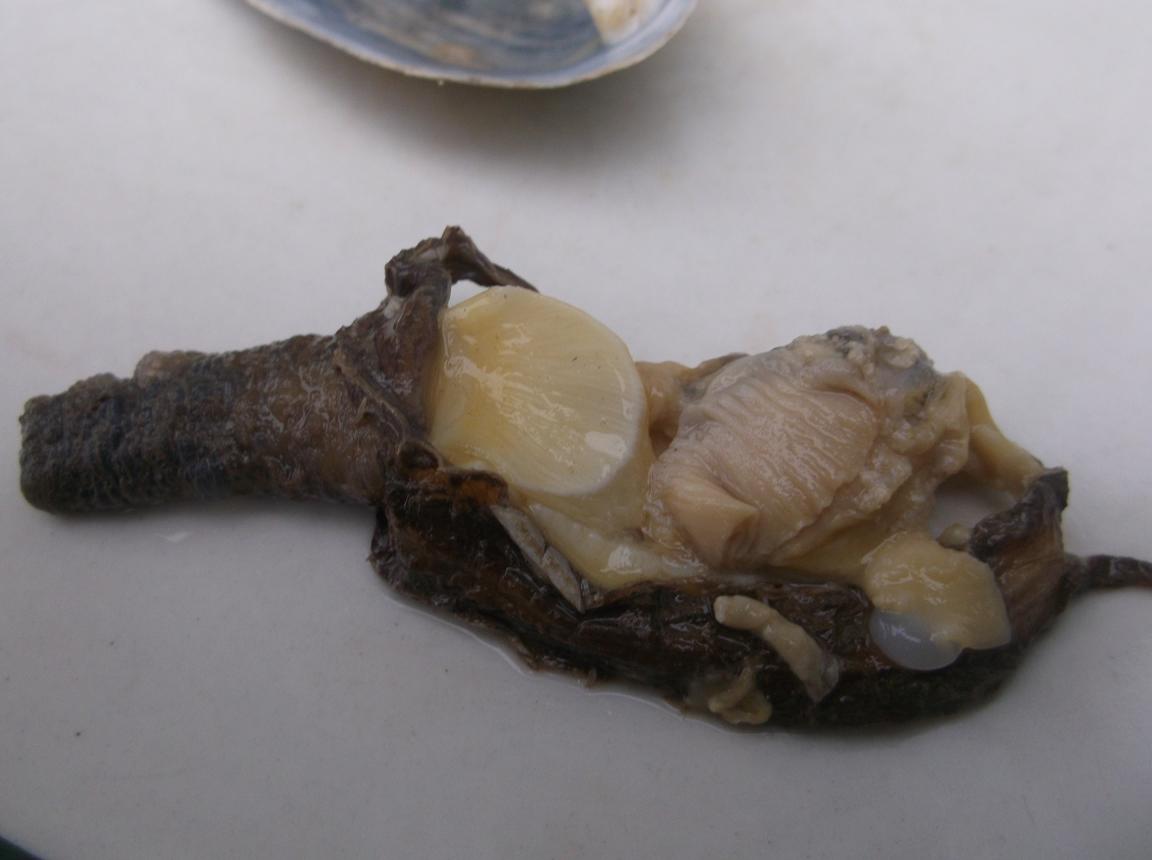
  Believe it or not, hard-shell clams and soft-shell clams are unrelated. Here in New England, our favorite clam would have to be the Steamer, which is a small, soft-shell clam and is harvested and served up and down the East coast. They are so called Steamers because of how they are most often prepared and enjoyed.
 Another favorite among us Yankees are the hard-shell clams(more about the differences below) that are most often called Quahogs. Quahogs(pronounced ko-hogs)come in 3 general sizes, with each having their own derivation:

Small quahogs are littlenecks, medium are topnecks and the larger variety are referred to as cherrystone clams.

  You often hear of clams having to be completely closed tight before cooking. This is not true for all clams. When cooking soft shell clams, such as the steamer, they are mostly slightly open, although there is a thin membrane that is covering this opening. Simply squeeze the clam lightly. Look carefully, if it moves its' neck inward toward the shell(if the neck is present) then it is alive. If it doesn't have a neck but you find that the steamer starts to shut its shell closer together, then it is alive as well. These clams are perfectly acceptable to cook and eat.
  With hard-shell clams, the shells do need to be closed tightly to affirm whether or not they are alive enough to cook and eat. Throw out any dead clams whatsoever, regardless of its' species or variety. Even cracked or broken shells should warn you that something is wrong, therefore discarding them is the appropriate thing to do.
  Next to the ever popular Clam Bake here in New England, simply water steamed clams are the essential element in every tourists culinary "must haves" when visiting. Although melted butter is the perfect accompaniment, many chefs(me included) have opted to spice things up a bit when steaming clams. Adding lemon juice, beer, garlic, onions, wine and various seasonings gives the diner a great flavor combination. Just remember that clams are a delicate lot, so subtlety is key when adding add-ins. I personally think lemon juice is far too strong to add to clams, even fried, but many swear by it.

  Although its popularity is decreasing over the years, some say regulations while others contend that the harvest is declining, clamming has been a way of life and a great past time for many generations. The prerequisite for digging for clams, the clam hoe, resembles a long handled garden hoe, but with short, pitch-fork like tines and is used extensively by those who want to gain the greatest yield of clams for selling.   And don't forget the wire mesh bucket and waders, the latter because of the softness of the mud "beaches" where you will find those breathing holes for the clams. You may need to wade in some water as well, making sure that low tide or the early stages of an incoming tide are present when you are ready for clamming.
  Often times, clams will simply be laying there on the top of the sand. In that case, just reach down and pick them up. But more often than not, you will have to dig a hole with your hoe, or your hands(being very careful and wearing gloves) about a foot down. The edges of a clam are sharp, so wear gloves. Gently dig down until you see the first sign of a clam and gently, without breaking the shell, lift these glorious bits up, throw in your mesh basket and continue. Make sure you take this basket to the water and rinse well when finished harvesting.
  Remember that most cities and towns have regulations regarding clamming, although you are sure to get a one day pass for just a few dollars. Your limit will vary from region to region, but always enough to make a great feed.

  Now for the cleaning, cooking and eating fun.The directions are the same for all clams, either hand dug yourself or store-boughten (Yeah, that's how us Yankee's talk) .You will need to clean them thoroughly and try to rid the clam of any wayward sand in its' belly. Most clams will release the sand and mud in their stomachs if you let them stand for about a half hour in some sea water or salted water(using 1/3 cup salt mixed into a gallon of tap water). Never use regular tap water or unsalted, this will kill them!
  Change water and repeat the soaking 2-3 times. Never mind the "tips and tricks" some use, like corn meal or other ludicrous ways.
  Most of the time, when purchasing clams in a supermarket of other purveyor of seafood, the clams have purged just about as much sand as they are going to, so this step is somewhat unnecessary.
  Make sure you scrub the clams with a stiff brush if you dug them yourself. If not, go ahead and check to make sure all the clams you are about to cook are alive(as referred to above). Discard any dead ones.
If you really want to remove a clam from its shell while it is alive, all you need to do is insert a strong, thin knife between the shell halves near the thick end and run it around between the shell halves. Try not to hit any of the clam meat and make sure you do this over a bowl, the nectar of the clams will trickle out and is great for many recipes. Soft shell clams are the easiest, along with long neck and geoduck, because they do not have very tight-fitting shells.
  Once you have separated the two shell halves, run the knife gently under the very tough muscle that is located  near the siphon to make sure there is no part of the clam still attached. There is nothing worse looking than a mangled, fresh clam. Use these raw clams as directed in your recipe. Clams on the halfshell are great as well. Just rinse off the detached shell and clam meat, replace the clam back onto one half of the shell, drizzle with a dab of lemon juice and eat as you would a fresh oyster.
  Another great way to cook clams in their shell is by simply placing them on a baking sheet then on your grill, close the lid and cook over medium heat until they all open, about 5-7 minutes later.
 
  Enjoying Steamers is quite another thing entirely. Some people will steam their clams, pull the meat from the shell and "dip to dine". Although a delight, I find the black "sheath" that covers the siphon to be a little too chewy for me, so I slip it off simply by holding the cooked clam belly in my right hand and gently pulling this sheath off with my left. It removes quite easily and now can be enjoyed to its fullest.


  When you go to any restaurant to try steamers, you will always be served with an empty basket(to throw your discarded shells into), a side of melted butter(sometimes ghee or clarified butter) and a bowl of some brackish looking water. This water is the same water that the steamers were cooked in and is used to rinse off any sand or shell particles that may cling to a clam. You dip it into the water, then butter then drag a trail of butter and juice from your shirt, passed your chin and lips and into your moth. Now you know why a bib is required.

Yankee Steamed Clams
Although I am very fond of simple steamed clams, I adore the flavor of garlic and shallot mingled with the briny mollusk. The vegetable broth, as well, lends itself perfectly without overpowering these sweet bi-valves. With a torn off piece of crusty bread to soak up any remaining juice at the bottom of the bowl is just a plus n my book!

2 pounds steamers
2 tablespoons butter
1 shallot, sliced
2 teaspoons garlic in oil
3/4 cup vegetable broth or clam juice*
Chopped fresh parsley, optional

  In a large skillet over medium heat, melt the butter. When hot and sizzling, add the shallot and garlic. Cook about 2 minutes, stirring frequently. Add the clams and broth, cover and cook for about 8-10 minutes, or until the clams open up. do not over cook. Shake the skillet very frequently to baste the clams with the seasoned broth. Remove from heat, pour entire contents into a large bowl and enjoy with parsley sprinkled over the top.
   
*Clam juice is easily found in any supermarket in a small 6 ounce bottle.


Sunday, August 18, 2013

The Machias Blueberry Festival

All I can say is "Holy (you know what)"...
By the time I finished my 10th dessert to determine who had the best blueberry concoction, I was ready to for a drink....Wait....that was the next category!
There was everything there from pies, cakes, savory and breads. And I must say, they were all delicious in their own right. AND, I was made a convert along the way.
I have always abhorred the taste of vinegar, in any form. I have hated vinaigrette's since I first started making them, many years ago. However, having said that, I tasted a Blueberry Vinaigrette salad dressing that I judged this past Saturday in Machias, Maine and now I have a new favorite salad dressing. The blueberry flavor shined through.
I especially liked the idea of a children's category and that is where my drink came in. Yes, the adults had a beverage category as well, a Blueberry Sangria that was a little heavy and a Blueberry Mimosa, that was a little heavy on the Blueberry Vodka that was added. The children's winner was a Blueberry-Lemonade, that was extremely satisfying. I would love to see more children participate in the years to come.
There was one outstanding concession stand, however, that got my attention(as well as the attention of my daughter who was holding the camera).
Worcesters Blueberry Company of Maine. They had the best assortment of Blueberry Jams, Jellies, Spreads....... heck, everything blueberry. And not just blueberries, WILD blueberries.
The cooking contest, as well as the whole premise of the festival, is centered around WILD blueberries, as opposed to high bush and cultivated(low bush) blueberries. The difference you ask?
                                                           High Bush Blueberries

                                                                         
                                                          Wild(left) and Cultivated blueberries
                                                                courtesy of villagevoice.com


That is open to interpretation and according to who you ask. Ask a cultivator and they will tell you theirs is better. Ask a purist, and the answer will always be the wild. There is one thing, although, that is not in question.
 Considering that the blueberry contains more disease-fighting antioxidants than any other fruit or vegetable, all this power evolves from the skin. Just 3/4 cup of blueberries gives you the same, if not more than, antioxidant protection as five times as much carrots, apples and even broccoli. And the skin is to thank for all that health help!
Because wild blueberries are much smaller than cultivated or high bush, it is almost double the skin content per unit of measure. In other words, while you can fit about 80 cultivated blueberries in a cup, you can hold more than 150 wild blueberries in that same cup, thusly molding more surface area. Consider that!.

 So to sum up this great festival, my body is protected for many years to come.