Now don't you dare turn your nose up at this recipe or post. I realize the thought of Red Flannel Hash belongs during the colder months, when we are all enjoying(at least up here in the NE)boiled dinners but this one is different. After all, it is YANKED!
Classically, and rightfully, made, it is a chopped combination of leftover vegetables from a true New England boiled dinner with beets, onions, turnip, potatoes, carrots and corned beef. This recipe is a variation on the theme, hence the moniker YANKED.
I truly believe I have elevated this dish so that not only can the younger generation enjoy it, but it fits perfectly with any gathering, be it formal or otherwise. The preparation takes little time but the cooking is what takes the longest. One good thing about it though, you have plenty of time to mingle, read or have a drink while everything is cooking.
Red Flannel Hash has an amusing beginning. During the mid-19th century here in New England, a husband woke up to a plate of hot, grilled, chopped hash in front of him early in the morning before he was to leave for the woods. He was a lumberman and his name has faded into obscurity now but the legend lives on. His wife began pouring his coffee as he was digging in, when he looked up and asserted that his breakfast looked like his red flannel shirt he had donned for the day. It was at that point the name Red Flannel Hash began and has lived on ever since.
Another Yankee link to this recipe is the polenta itself. I often laugh when I see polenta served at fine dining restaurants around the world because we Yankees were the first on these shores to make this 'mush'. Yes, I said mush. Corn meal mush to be exact. We have been stirring yellow cornmeal into boiling water since the early 17th century and enjoying it with butter or a drizzle of cream on top. We also let the leftover cornmeal mush firm up overnight so that it could be sliced and fried the next morning. It was a lowly meal but easy to make and very VERY cheap, as it still is today. I wouldn't pay more than a buck for a serving of cornmeal mush now, if a restaurant served it,. But because the name has changed to Polenta, people pay a lot more simply because of the name change. Yup! I am even laughing as I write this post.
This recipe is my take on a classic Yankee dish, taking out the protein and giving it a whole new twist. By all means add some chopped ham in this recipe but I think you will find it more than satisfying without it.
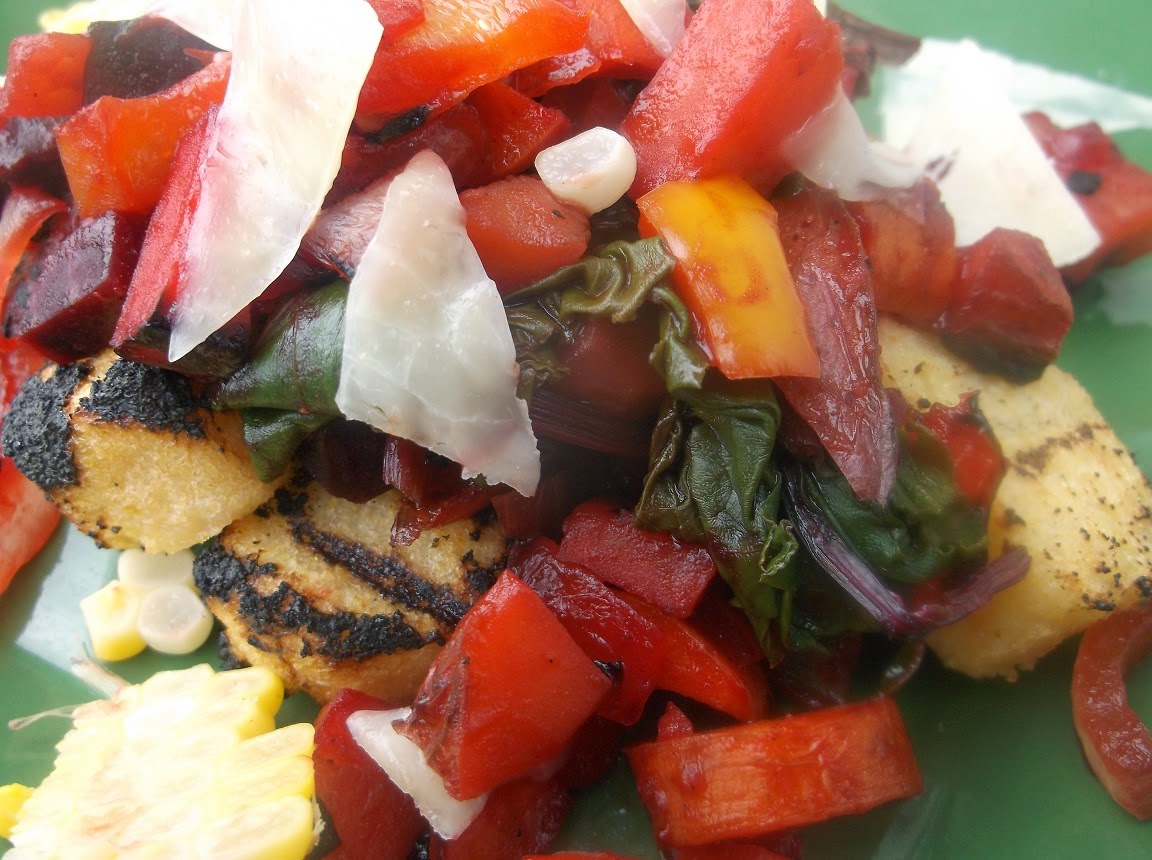
Yanked™ Red Flannel Hash
This dish is not only fragrant but beautiful as well, a pink hue from the beets soaki9ng into all the vegetables.
½ pound carrots, halved lengthwise and crosswise
1 bell pepper, halved and seeded
1 onion, peeled and sliced into 1/2-inch rings
½ pound beets, peeled and sliced 1/2-inch thick
Greens from beets
1 pound potatoes, sliced 1/2-inch thick
1 ear of corn
Nonstick cooking spray
6-8 thick slices polenta*
3 ounces sharp Cheddar cheese, shredded or shaved
Marinade:
1/2 cup apple cider vinegar
1/2 cup apple juice
1 tablespoon brown sugar
1 tablespoon soy sauce
1 teaspoon garlic powder
1/2 teaspoon cayenne pepper
Salt and black pepper to taste
In a bowl, whisk together all marinade ingredients together and set aside. Pull down husk on the corn, removing the hair. Soak for 30 minutes. Meanwhile, heat grill on medium heat. Spray the vegetables on all sides with nonstick cooking spray. Lay carrots, onion, beets, bell pepper and potatoes on the grill and close lid. Watching carefully, char both sides of all veggies just until you can see the marks, remembering that bell peppers take less time. No need to cook vegetables thoroughly, we are after the charred flavor.
Remove the vegetables reduce grill heat to low. On a cutting surface. chop charred vegetables into roughly 1-inch cubes. Evenly divide into 4-5 large pieces of tin foil. Place the beet greens in a smaller piece of foil. Drizzle a couple tablespoons marinade into each and crimp well. Place back onto the grill, along with polenta slices and corn on the cob. Close lid and cook 20-25 minutes, rotating corn frequently, or until the corn husk has darkened and the kernels are done. Take a peak, carefully, to make sure vegetables are done as well. You don't want them mushy, just cooked.
Remove all items from the grill, emptying the vegetable packets into a large bowl along with greens, stir to combine. Cut the stem end of the corn off and remove husk. With cut side down, slice off the kernels of corn onto a plate.
To serve, Place a couple slices of charred polenta slices on each plate, evenly divide vegetables over polenta, followed by some of the grilled corn and shavings of Cheddar cheese.
* Simply buy a roll of premade polenta from the supermarket or spend far less by making it yourself. Put 3 cups water, chicken or vegetable broth in a saucepan and bring to a boil over medium heat. Add Salt, black pepper, Parmesan cheese or any seasoning you desire such as garlic powder, crushed thyme or other herbs. Slowly whisk in 1 cup cornmeal vigorously to prevent lumps from forming. Immediately remove from heat and pour into a plastic wrap-lined loaf pan. Refrigerate at least 2 hours, or until firm and cooled.
Classically, and rightfully, made, it is a chopped combination of leftover vegetables from a true New England boiled dinner with beets, onions, turnip, potatoes, carrots and corned beef. This recipe is a variation on the theme, hence the moniker YANKED.
I truly believe I have elevated this dish so that not only can the younger generation enjoy it, but it fits perfectly with any gathering, be it formal or otherwise. The preparation takes little time but the cooking is what takes the longest. One good thing about it though, you have plenty of time to mingle, read or have a drink while everything is cooking.
Red Flannel Hash has an amusing beginning. During the mid-19th century here in New England, a husband woke up to a plate of hot, grilled, chopped hash in front of him early in the morning before he was to leave for the woods. He was a lumberman and his name has faded into obscurity now but the legend lives on. His wife began pouring his coffee as he was digging in, when he looked up and asserted that his breakfast looked like his red flannel shirt he had donned for the day. It was at that point the name Red Flannel Hash began and has lived on ever since.
Another Yankee link to this recipe is the polenta itself. I often laugh when I see polenta served at fine dining restaurants around the world because we Yankees were the first on these shores to make this 'mush'. Yes, I said mush. Corn meal mush to be exact. We have been stirring yellow cornmeal into boiling water since the early 17th century and enjoying it with butter or a drizzle of cream on top. We also let the leftover cornmeal mush firm up overnight so that it could be sliced and fried the next morning. It was a lowly meal but easy to make and very VERY cheap, as it still is today. I wouldn't pay more than a buck for a serving of cornmeal mush now, if a restaurant served it,. But because the name has changed to Polenta, people pay a lot more simply because of the name change. Yup! I am even laughing as I write this post.
This recipe is my take on a classic Yankee dish, taking out the protein and giving it a whole new twist. By all means add some chopped ham in this recipe but I think you will find it more than satisfying without it.
Yanked™ Red Flannel Hash
This dish is not only fragrant but beautiful as well, a pink hue from the beets soaki9ng into all the vegetables.
½ pound carrots, halved lengthwise and crosswise
1 bell pepper, halved and seeded
1 onion, peeled and sliced into 1/2-inch rings
½ pound beets, peeled and sliced 1/2-inch thick
Greens from beets
1 pound potatoes, sliced 1/2-inch thick
1 ear of corn
Nonstick cooking spray
6-8 thick slices polenta*
3 ounces sharp Cheddar cheese, shredded or shaved
Marinade:
1/2 cup apple cider vinegar
1/2 cup apple juice
1 tablespoon brown sugar
1 tablespoon soy sauce
1 teaspoon garlic powder
1/2 teaspoon cayenne pepper
Salt and black pepper to taste
In a bowl, whisk together all marinade ingredients together and set aside. Pull down husk on the corn, removing the hair. Soak for 30 minutes. Meanwhile, heat grill on medium heat. Spray the vegetables on all sides with nonstick cooking spray. Lay carrots, onion, beets, bell pepper and potatoes on the grill and close lid. Watching carefully, char both sides of all veggies just until you can see the marks, remembering that bell peppers take less time. No need to cook vegetables thoroughly, we are after the charred flavor.
Remove the vegetables reduce grill heat to low. On a cutting surface. chop charred vegetables into roughly 1-inch cubes. Evenly divide into 4-5 large pieces of tin foil. Place the beet greens in a smaller piece of foil. Drizzle a couple tablespoons marinade into each and crimp well. Place back onto the grill, along with polenta slices and corn on the cob. Close lid and cook 20-25 minutes, rotating corn frequently, or until the corn husk has darkened and the kernels are done. Take a peak, carefully, to make sure vegetables are done as well. You don't want them mushy, just cooked.
Remove all items from the grill, emptying the vegetable packets into a large bowl along with greens, stir to combine. Cut the stem end of the corn off and remove husk. With cut side down, slice off the kernels of corn onto a plate.
To serve, Place a couple slices of charred polenta slices on each plate, evenly divide vegetables over polenta, followed by some of the grilled corn and shavings of Cheddar cheese.
* Simply buy a roll of premade polenta from the supermarket or spend far less by making it yourself. Put 3 cups water, chicken or vegetable broth in a saucepan and bring to a boil over medium heat. Add Salt, black pepper, Parmesan cheese or any seasoning you desire such as garlic powder, crushed thyme or other herbs. Slowly whisk in 1 cup cornmeal vigorously to prevent lumps from forming. Immediately remove from heat and pour into a plastic wrap-lined loaf pan. Refrigerate at least 2 hours, or until firm and cooled.


