Wednesday, March 30, 2016

Ricotta Cheese...Which To Use

There really is only one rule of thumb when it comes to using different types of ricotta cheese. The less fat it contains, the less flavor it will have.....but not enough for you NOT to replace it in almost all recipes. You may also find the whole milk ricotta to be more creamy, but again, if using with other ingredients, which is generally the case, then you would never miss it. When was the last time you sat down to just a spoonful of ricotta?

Believe it or not, ricotta cheese is considered a fresh cheese because it isn't ripened. It is simply the by-product of cheese making. The leftover whey is heated and the proteins are curdled and strained, often with the addition of an acid such as rennet, vinegar or lemon juice.

The name ricotta literally means recooked, as seen above.


Let me give you a rundown of the dietary facts on the different styles of ricotta.


Per 1/4 cup:


Whole Milk Ricotta:

Total fat-6g
Saturated fat-4g
Trans fat-0
Cholesterol-25g
Sodium-75mg
Carbohydrates-3g
Sugars-3g
Protein-7g
Calories from fat-50
Total calories-90
 

Part Skim Ricotta:

Total fat-4.5g
Saturated fat-3g
Trans fat-0
Cholesterol-25g
Sodium-85mg
Carbohydrates-3g
Sugars-3g
Protein-6g
Calories from fat-45
Total calories-70

 
Light Ricotta:


Total fat-2.5g
Saturated fat-1.5g
Trans fat-0
Cholesterol-15g
Sodium-55mg
Carbohydrates-3g
Sugars-3g
Protein-5g
Calories from fat-20
Total calories-60


Fat Free Ricotta:

Total fat-0g
Saturated fat-0g
Trans fat-0
Cholesterol-10g
Sodium-65mg
Carbohydrates-5g
Sugars-2g
Protein-5g
Calories from fat-0
Total calories-50

Want to look into something the science community is investigating in depth? It appears that whey, or whey protein, just may be one of those "miracle" items that may stave off much more than originally thought. Maybe these body builders are onto something as they swig down their whey drinks or munching on high protein bars.

http://www.medicalnewstoday.com/articles/263371.php

Now that I have given you the low down of ricotta cheese, here are two recipes using this fresh cheese. One of them uses full fat while the other is fat free.


Blueberry-Ricotta Parfaits


Such a great way to for a fat free parfait. I use frozen blueberries here because you really need the soft texture as well as any accumulating juice that usually accompanies frozen berries.

2 cups frozen blueberries, divided
2 teaspoons cornstarch
2 tablespoons honey
1(15-ounce)tub fat free ricotta cheese
1 cup plain yogurt

Place half the blueberries in a small saucepan and toss with cornstarch. Leave remainder of blueberries out to thaw. Add honey to blueberry/cornstarch mixture and stir to combine. Place over medium heat and bring to a boil, stirring frequently. Continue cooking and stirring until thick, about 4-5 minutes. Transfer to a bowl, cover and refrigerate until completely chilled.

Add ricotta cheese, thawed blueberries and yogurt in the bowl of a food processor and pulse, on high, until as smooth as possible. You can also use an electric mixer with a paddle or beaters.

To serve, halfway fill serving glass with cheese mixture. Place 2 tablespoons chilled blueberry mixture on top and repeat with remaining cheese and blueberry mixtures. Chill 1 hour before serving.

Makes 4 small parfaits.


Real Vanilla 'Creme'  


I use whole milk ricotta because of the lack of other ingredients. And as you may notice, I use a vanilla bean. I do realize they are super expensive, but the flavor you get from just one bean will make you a convert as well. This Creme is great simply spooning it into your mouth or as a dip from an apple, peach, fresh berries to your fingertips.

1(15-ounce)tub whole milk ricotta cheese
1 1/2 cups plain, or flavored, yogurt
1 vanilla bean, split and scraped *
1 tablespoon honey
Fresh fruit of your choice, if desired

 
Place the ingredients in your food processor bowl. Process until very smooth, about 2 minutes. Refrigerate 1 hour before serving. Serve in small, 1-cup dessert bowls or ramekins.

* Slice vanilla bean in half lengthwise. With the blade of a knife, scrape the seeds from the pod into the cheese mixture. You can also use 1 teaspoon pure vanilla extract.

Monday, March 21, 2016

Tea-FREAKING Tasty!

There really isn't anything I can say about Easter that everyone doesn't already know. Nor is there anything food related that I should add about this Holiday......other than "Let's dig in!" using a great flavored egg as a base for a couple of remarkable recipes.

 
Tea Brown Eggs

Not only are these eggs great for your Easter get together, but equally enjoyed during the summer, whenever cookouts are on your menu. Use this umami-style egg recipe in lieu of regular hard boiled eggs for a multitude of recipes, including Simply Yanked Deviled Eggs and Fried Sriracha Deviled Eggs, found below.

6 eggs
3 cups water
1/2 cup soy sauce
1 tablespoon molasses
1/2 teaspoon minced garlic in oil
1/2 teaspoon sesame oil, optional
6 orange pekoe tea bags

Boil eggs until hard boiled. Immediately submerse in cold water until completely cooled. Meanwhile, bring to boiling, over high heat, water, soy sauce, molasses, garlic and sesame oil. Whisk well, remove from heat and add tea bags; set aside. Peel eggs. Place eggs and tea mixture in a large bowl with a lid, or simply cover with film wrap. Refrigerate 24 hours, dunking eggs a couple times to marinate evenly. Drain, discarding marinade and tea bags and enjoy.


Simply Yanked Deviled Eggs   


A smoky, simple addition to any Easter dinner or picnic. If you don't have Chinese 5-Spice powder, simply make your own by mixing 1 tablespoon star anise, 1 teaspoon fennel seeds, 1/2 teaspoon each of cinnamon, peppercorns and cloves. Pulse in a blender or coffee grinder.

6 Tea Brown Eggs
2 tablespoons mayonnaise or salad dressing
1 tablespoon sour cream
1/4 cup shredded, smoked Cheddar or Gouda cheese, divided
1/2 teaspoon Chinese 5-Spice powder

Split Tea Brown Eggs in half and scoop out the yolks. With the yolks in a bowl, mix in yogurt, 3 tablespoons cheese and Chinese 5-Spice powder. Fill each cavity of each egg half with cheese mixture, cover and refrigerate at least 1 hour before serving with remainder of cheese sprinkled over the top.


Fried Sriracha Deviled Eggs  


Sriracha and chili sauce are basically the same thing. Made with chili paste, vinegar, garlic, a sweetener and a pinch of salt, it has been a staple in Thai cooking only for a short time since its first appearance less than a century ago. Always opt for the hot chili sauce, if substituting, because of the heat so often associated with sriraha.

6 Tea Brown Eggs
3 tablespoons sriracha or hot chili sauce
1/4 teaspoon red pepper flakes
1/4 teaspoon horseradish, optional
1 cup cornmeal
1 cup milk
2 eggs
Oil for frying

Heat oil(if using a deep fryer)according to manufacturer's instructions to 350-degrees F. Or use a sturdy pot, and 2-3 cups canola oil, and heat oil over medium heat with a thermometer attached to the side. Meanwhile, cut each egg in half and remove yolks into a bowl. Thoroughly blend with sriracha sauce, red pepper flakes and horseradish. Cover and refrigerate until needed. Whisk milk and eggs until well combined. Dip each egg half into milk mixture and into cornmeal. Dip it back into the milk mixture a second time and lastly back into cornmeal. Gently lower 3-4 breaded egg halves into hot oil and fry until golden brown all around, about 3-5 minutes, turning once or twice to ensure even cooking. Let oil get back to temperature before continuing with remainder of egg halves, Place fried eggs onto a serving plate with the cut-side facing up and evenly distribute prepared yolk filling. Serve immediately.

Saturday, March 12, 2016

A Taste of Timeless New England


Even more revered than molasses and corn, maple syrup was the most widely used of all foodstuffs in New England since its colonization, and even long before.

The production of food products from this deciduous tree is almost exclusively limited to North America.

Long before the arrival of colonists, the natives knew about the sap that ran from a hole in a maple tree. They boiled it down until most of the water evaporated and they, in turn, showed these white men how to do the same.

By the early 19th century, the yearly sugaring that began anywhere from January to March, became a reason to hold festivals throughout Yankee-land. Many authors, journalists, diarists, historians and poets have joyfully regaled of the original maple candy, when, in the old days, hot syrup was poured on the snow, left to harden for a minute then eaten with pickles(of which most sap-houses still do today. Or of the fun sport of sleighing during the end of winter to an event held in every New England town at someone's home or business to celebrate with friends and family the first trickle of sap.

Everyone went home with a jug or two of real maple syrup to enjoy in almost every dessert made by mother. Two of my favorites are the long forgotten Maple Skimmer and Crisp Maple Cookies.


Crisp Maple Cookies
 

Once of the most amazingly "homy" cookies you can make, winter or summer, and one of the easiest. This cookie ranks as high as gingerbread, apple pie and molasses cookies when it comes to New England comfort food.

Nonstick cooking spray
3 cups flour
1/3 cup granulated or brown sugar
1 teaspoon baking soda
1/4 teaspoon each cinnamon and nutmeg
1/2 cup(1/2-stick)butter or margarine
1 cup real maple syrup *
1/3 cup apple jelly, whisked smooth
1 tablespoon lemon juice

Preheat oven to 350-degrees F. Lightly grease a cookie pan with nonstick cooking spray; set aside. Blend the flour, sugar, baking soda, cinnamon and nutmeg in a large bowl.
Cut in butter with a pastry knife, two forks, or your finger tips until it resembles large crumbs. Combine maple syrup, apple jelly and lemon juice in a separate bowl. Add to flour mixture and stir it with a sturdy spoon, or a paddle attachment on a mixer, until to comes together in a cookie dough.
Dollop tablespoon measures of dough onto prepared cookie pan, leaving at least an inch in between cookie dough mounds. Bake 8-10 minutes, or until lightly browned and crisp around the edges. Remove from oven to cool slightly before transferring to a rack to cool completely.

NOTE: This cookie is great as a 'rolled' cookie as well. Simply roll a tablespoon measure of the dough between your palms. Place dough ball on prepared pan and flatten to 1/4-inch thickness with the bottom of a glass, dampened by water to prevent sticking. Continue as directed for baking.

* The darker and more intensely-flavored maple syrup, the better


Maple Skimmer

This beverage tops any flavored coffee I can find in any coffee house, and is also a welcome treat hot, during the colder months. Simply omit the ice cubes and plop a big fat marshmallow into each mug before serving. But try this during the hot months.

Coffee Ice Cubes
2 cups freshly brewed, strong coffee
1(15-ounce)can evaporated milk
1/2 cup real maple syrup *

To make Coffee Ice Cubes, do I really need to tell you to pour brewed coffee in an ice cube tray and freeze? Add remainder of ingredients in a pitcher, mix well and chill until completely cold. Pour over coffee ice cubes and serve.


I also like to heat maple syrup in a saucepan and any one of my favorite jellies, jams, preserves or all fruit. Whisk well, and let cook over medium heat until hot and the jelly has dissolved. Remove and serve over your pancakes, French toast or waffles. Or dip some homemade biscuits into it.


Here are some great links to further your interest in the making of maple syrup, the particular festivals held all around New England and to order pure maple products.

Bet you didn't know there was a museum dedicated to maple did you?

http://maplemuseum.com/

Here is a great link to show you what is involved in maple sugaring. My great friend, Kim Knox Beckius is a New England writer and a self-confessed Yankee who truly loves her profession.

http://gonewengland.about.com/od/maplesugaring/tp/New-England-Maple-Events.htm


How about keeping that "home and hearth" smell in your home year round? Yup, even Yankee Candle has the fragrance, although it is mingled with another great Yankee favorite, but delightful none-the-less.

http://www.yankeecandle.com/search?Ntt=maple&_requestid=18328

Mainah's.....here ya' go! Everything you could possibly want using maple as the key ingredient. Hey, Canada can't take all the glory!

https://mainemapleandhoney.com/shop/

https://www.mainemadeandmore.com/product-category/food/candy/

http://www.mapleconfections.com/index.html


The BEST pepper I have ever had, and one that you have never heard of. Take a peak inside.....

http://www.nervousnellies.com/maine-maple-candy/

A more in-depth look at all things Maine and Maple.

http://mainemapleproducers.com/maine-maple-sunday-map.html

For all my friends in Vermont, you truly are greatly, and widely, known for maple syrup and all its glory.

http://vermontmaple.org/


The Granite State is a top contender for maple products as well.

http://www.unionleader.com/apps/pbcs.dll/article?AID=/20160310/NEWHAMPSHIRE07/160319986/0/NEWHAMPSHIRE0708

Massachusetts.....here YOU go!

http://massmaple.org/

Looking for a festival near you? Visit this site not only for what's happening in the way of maple, but a great place to learn so much more about our New England heritage.

http://www.visitnewengland.com/all/fairs-and-festivals/


Sunday, February 28, 2016

Breakfast Pie....A Forgotten Past

That old institution...the New England breakfast! Not nearly what is was in the days of our ancestors, when they sat down at the breakfast table laden with more food than is seen at all meals combined now-a-days. The juicy steaks, pork chops, fried fish, piles of ham and eggs, hash brown potatoes, high stacks of buckwheat pancakes(constantly being replenished by the cook of the house) and maple syrup as fresh as the general store could bring it in.
Heck, I remember fondly of my mother and father serving for breakfast at their restaurants in the mid-1970s:

The Woodsman's Breakfast-2 grilled pork chops, eggs, homefries, toast and coffee

The River Driver Breakfast-Gilled Trout with eggs, homefries, toast and coffee.

Just to name two.


 And amongst all this food in days gone by, could be found that one mainstay of colonial life.... Pie!


"I will thank you to pass the pie, if you please!", Ralph Waldo Emerson is said to have remarked to Oliver Wendell Holmes in the early, mid 19th century.

 Henry Wadsworth Longfellow would often remark "There's a gazelle in the garden." whenever a flake of pie crust fell into his beard while dining at breakfast with his family at Cambridge.

Now just because pie was universally enjoyed throughout all regions of New England and Canada, this doesn't mean that all breakfasts were the same. More fish, for example, was used along the shoreline than in the hinterland, but even seaside Cape Cod had pie for breakfast. A 19th century historian for the town of Chatham, Massachusetts repeated the following, taken from an 1802 Bill of Fare from this seaside community.

"Food can so easily be procured, either on the shore or in the sea, that, with the profit which arises from their voyages, in which it must be confessed they labor very hard, the people are enabled to cover their tables well with provisions. A breakfast among the inhabitants, and even among those who are called the poorest, for there are none which may be called really poor, consists of tea or coffee, brown bread , generally with butter, sometimes without, salt and fresh fish, fried or broiled. A dinner affords one or more of the following dishes: roots and herbs; salted beef or pork boiled; fresh butcher's meat not more than twelve times a year; wild fowl frequently in the autumn and winter; fresh fish boiled or fried with pork; shell fish; salt fish boiled; Indian pudding; pork baked with beans. tea or coffee also frequently constitutes part of the dinner. A supper consists of tea or coffee, and fish, as at breakfast; cheese, cakes made of flour, gingerbread, and pies of several sorts. This bill of fare will serve, with little variation, for all the fishing towns in the country. In many families there is no difference between breakfast and supper; cheese, cakes, and pies being common at the one as at the other."

In the Pictorial Geography of the World, published in Boston in 1841, Samuel Goodrich, writing about New England, adds:

"The breakfast, which, in the country, is held at an early hour, and often by sunrise, is no evanescent thing. In a farmer's family, it consists of little less than ham, beef, sausages, bread, butter, boiled potatoes, pies, coffee and cider."

Although codfish cakes, browned, crisp and fluffy, were a Sunday morning tradition in most New England families, pie was an everyday 'must have' at the breakfast table.

By the mid-1890s, pie was quickly going out of fashion, along with almost everything else on the morning menu touched on above. This was because more and more Americans were travelling abroad and were noticing that other countries they had visited were eating what were called "Continental breakfasts". And as with clothing styles, fashion(as depicted below from an 18th century advertisement)etiquette and mannerisms, these New England travelers brought those ideas back here to the East coast.

It was quickly becoming fashionable for those returning from abroad to denounce pie as "provincial", and none of these people wanted to be thought of as unsophisticated, now that they visited France or England.

Big breakfasts were out and one must do as they do in Paris, and not Paris, Maine either. So instead of trying to convert our French friends to enjoying pie for breakfast, they surrendered their birthright and permitted themselves to Parisian trends.

But we can't blame these visits abroad for the diminishing and generational big breakfasts. Nope, New Englanders were beginning to rush their lives in the world of society to the point "...when we began to measure our progress by the rate of speed at which we could move and began to think that because we could get around ten or a dozen times faster than our grandfathers, we were that much better than they were, pie as a morning dish was doomed. For nobody had time to eat a decent breakfast."

It used to be said that the absence of pie would have been more noticeable than the scarcity of the Bible.

E.B. White once wrote:


To foreigners, a Yankee is an American.
To an American, a Yankee is a Northerner.
To a Northerner, a Yankee is an Easterner.
To an Easterner, a Yankee is a New Englander.
To a new Englander, a Yankee is a Vermonter.
And to a Vermonter, a Yankee is someone who eats pie for breakfast.


It isn't hard to understand what would have been the most popular pie for the breakfast either. Considering apple, berry, pumpkin and mince pies were popular at all times of days and seasons, then it is easy to assume that whatever was leftover from the previous day would have been enjoyed the following morning.

Now for that age-old question of whether or not New Englanders are known for cheese with apple pie.

In short, absolutely!

As seen above, cheese was at the table for breakfast and would have been available at all meals as well. There is no need to dig deep into journals, articles, research or published essays for common sense to apply here. New England was known for the best Cheddar cheese in America. New England was known for the best apples and apple bi-products in America. It is a natural affiliation that the two would have been combined many, many times over in just as many ways.

No, Cheddar cheese was NOT melted over an apple pie. Apple pie was always eaten hot from the oven, unless leftovers were had the following morning.

It is funny when I read that some food historian gives the reason why Cheddar and apple pie were eaten together. They go on to say the saltiness of the cheese offsets the sweetness of the apples and crunchiness of the pie crusts. I would much rather tell it like it is, rather than act as though I am a food connessieur with an ego to boost. Simply and plainly, both were in homes of old all the time and it was only natural for BOTH to be consumed together.

About the image of cheese melting over apple pie now. American cheese was not added and melted over apple pie untildu the 1960s and '70s. Although good in its' own right, there is still nothing better than taking a bite of sharp Cheddar, followed by a forkfull of warm apple pie, sans any ice cream...NOT NEEDED!

There probably isn't any rhyme or reason behind this post. I didn't give you any dates that pie was first served at the New England breakfast table, nor any specific person who could be identified as starting it. I gave you no certain pie that graced any identifiable table from any given region in "Yankee-land". Heck, I am not even able to specify any entry that proves only Cheddar cheese was served with apple pies from days gone by.

Sometimes common sense dictates proof. I have scoured every cookbook printed in New England from the first printed to the 1800s from New England. I have hundreds of journals and diary entries from dozens of Yankees since the 17th century. I am a 30 year New England food historian that craves the true beginnings of our "kitchen culture" and am a proud 7th genertion Mainah' and 11th generation Yankee, whose family have been both backwoods families and coastal progeny. And the bottom line is we have enjoyed pies for breakfast since the beginning, but this has all been lost to time and changing, culinary climates.

And Cheddar cheese with apple pie is about as Yankee as you can get.....as long as it is not melted over the top.!


A fitting epilogue to this post would be:

Why did New Englanders formerly eat "great pies" for breakfast?

Because they had great things to do!


Friday, February 19, 2016

The 'Maine' Truth Behind Gumbo's.

"Jambalaya, crawfish pie, file gumbo. 'Cause tonight I'm gonna see my ma chere amie o ....." Boy, I hope others remember that song! I am not old enough to remember this Hank Williams tune when it first came out, but I am blessed with reel-to-reel recordings my grandparents made of the country radio stations back in the 50s with this song being sung. I still listen to them today, even though they are now recorded on cd's. But I am wondering off topic.

 There are two basic types of Gumbo, Cajun(country food) and Creole(city food) styles. Many of the Creoles were French(as the Cajuns)but their background and migration saga was from an entirely different part of the Western Hemisphere, but equally as disruptive, cruel, abusive and immoral. As it pertains to their style of cooking, with Gumbo in particular, okra is frequently added. It has also been stated that they used a butter/flour roux as a base for this dish. It was cooked long enough to change color or flavor,  creating a dark-colored thickening agent. Creole Gumbo is also made with a tomato product in order to help thicken this dish, while Cajun Gumbo uses strictly roux.


http://fr4zoeh13.wikispaces.com/L%27histoire+de+la+D%C3%A9portation+des+Acadiens


   Cajun style Gumbo, on the other hand, is generally thickened with a roux made of oil and flour that has been whisked until it is smooth, but not browned, as emphatically believed by many food historians and chefs.


   I completely disagree with both of these roux adherences however. It is totally wrong and makes no logical sense! The French were, and have been, known for cooking with butter for centuries before the introduction of Acadians in Canada and Maine, and ultimately Louisiana. They never, EVER used oil in dishes to thicken, that was an Italian introduction. Much the same as tomatoes in Creole but not Cajun Gumbo.
 
The portrait of some dispersed Acadians, courtesy of http://hysterias1.wikispaces.com/acadia

The Cajun people, mostly in the Southwestern portion of Louisiana, use some type of fowl, as well as sausage and fish frequently. But what they do NOT use is tomatoes, as mentioned. As for file powder? I am not even going to touch that one. Half the experts assert that these ground sassafras leaves are a mainstay in Cajun style Gumbo, while the other half aver Creole Gumbo is not the same without it.


My favorite, well known, age old expression of simply telling the difference between the Cajuns and Creoles is that the Creoles are said to be able to feed 1 family with 3 chickens, while the Cajuns can feed 3 families with 1 chicken. Right away, I knew they were my ancestors.


It began with the Port Royal settlements in upper Maine and lower French Canada during the early 17th century. This area is known as Acadia. My direct ancestor(Pierre Thibodeau)was of the St. John, Canadian French, who were part of this migration to be mentioned.


http://greenerpasture.com/Ancestors/Details/6941


In order to prevent this post from becoming a history lecture, by the first decade of the 18th century, the French Acadians began to stand up for their moral disciplines against the British, and because of that, they were slowly being pushed back into the wilderness, attacked by the Native Americans and deported to dozens of other colonies in Eastern America.

Then the Grand Derangement(Great Upheaval)began in ernest in the mid-1700s, with a total of more than 13000 being uprooted and thousands of their homes being destroyed.

By 1765, a couple of groups of these French settlers found themselves in Louisiana, under Spanish control at the time, and thus began the introduction of French food to the area.

As for the name Cajun? You can listen to all these so-called linguistic experts give you a litany of meanings, some so outlandish that they are foolish. The correct meaning? Acadian! The words Cajun and Acadian are simply the same word, just skewed somewhat over the generations. A perfect example of this is another term, Injuns. Indians and Injuns are the same word, with the same exact meaning, but similarly skewed.


So to confuse you even more, I have Yanked Gumbo to offer what I believe to be the best of two French dishes. I have taken the liberty of using the so-called Creole roux and cooking it until it darkens, giving it a great nutty characteristic, as my French ancestors did.

I have also taken the Creole tomatoes and added them here. Not for their thickening power, because the roux does that very well, but simply for the flavor.


Cajun Turkey and Sausage Gumbo(Quick or Classic)


Here are two ways of making this "Loosiana" classic. Which ever way you prepare it, always use the Cajun Holy Trinity, which is peppers, onions and celery. This is a true 'fill 'er up' kind of meal, even going so far as using a fork. Here is the quickest method of the two.


2(4-ounce)links hot or sweet Italian sausage
1/2 cup minced onion
1 small green bell pepper, seeded and minced
1 rib celery, sliced thin
2 teaspoons minced garlic in oil
2 cups beef broth
1(15-ounce)can diced tomatoes in juice
1 1/2 cups cooked turkey or chicken, diced
1(6-ounce)can tomato paste
1/2 teaspoon oregano
Salt and black pepper to taste
2 cups brown rice
1 1/2 cups cooked yams or sweet potatoes, diced

Remove casings from sausage and crumble into a large saucepan. Add onion, green pepper, celery and garlic, Stir to combine and cook over medium high heat until meat is cooked thoroughly and celery is softened, about 5-7 minutes. Drain fat and add broth, tomatoes with juice, turkey, tomato paste and seasoning. Stir well, add yams, reduce heat to low, place cover slightly askew and simmer for at least 10 minutes, or the length of time you are cooking the rice.
Cook rice according to package directions.

To serve, mound a cup of rice in the middle of each of 4 serving bowls and surround with gumbo. Serve immediately.

Or it you want a classic Cajun style gumbo, place 4 tablespoons butter or margarine in a saucepan. Melt over medium high heat. Whisk in 3 tablespoons flour until smooth. Continue cooking and almost constantly stirring for about 6-8 minutes, or until the roux is the color of a copper penny. Immediately add beef broth, whisking until smooth. Add tomatoes, turkey, yams and seasonings. When you have cooked the sausage with the remainder of the vegetables in a separate skillet, per instructions above, transfer to the tomato mixture, stir well and bring up to temperature before serving.

Tuesday, February 9, 2016

The Ultimate Decadense...Bar None!

Even though Chocolate Fondue is only a generation old, it seems that any type of fondue has been all but forgotten. A type of think ganache, chocolate fondue is the perfect Valentine's Day treat for your loved one. And guys, there is absolutely no excuse for having this ready for your gal on this special day because it is super simple to make.


Valentine's Day Fondues

Find, below, two of my all time favorite fondues. There truly is no better "sweetheart" dessert to enjoy WITH your loved one then decadent fondues. When you see the chocolate dripping down her chin or watching her have to lick the chocolate from her fingers......let's just say there is a reason why melted chocolate is perfect on Valentine's Day. And these recipes are foolproof, for that man who would much rather have a wrench in their hand than a whisk.

Mexican Hot Cocoa Fondue


1(12-ounce)can, or 1 1/2 cups, evaporated skim milk
1/4 cup red hot cinnamon candies, optional
1 tablespoon brown sugar
1 teaspoon vanilla
1/4 teaspoon each cinnamon and chili powder
2 cups dark chocolate chips *
Cake pieces, marshmallows or fruit

Simply heat whisk and heat the first six ingredients in a saucepan over low heat until scalding hot, stirring almost constantly when it is starting to get hot to prevent scorching. Place the chocolate chips in a large bowl. When the milk mixture is scalding, pour over chocolate, stirring once to allow milk to coat chocolate. Let sit for 3 minutes, stir until chocolate is melted and pour into bowl. Serve with skewers and your choice of cake, marshmallows or fruit.

* Use whatever chocolate you desire, as long as it is broked into small pieces to melt. I find that at least 72% cacao chocolate works best for a strong chocolate flavor.

Chocolate Peanut Butter Fondue

Your loved one crave peanut butter? Than this is the smoothest. Rich and oh so delicious, go ahead and add a little more milk at the end if you truly want this to drip down her chin!

3/4 cup evaporated skim milk
1 1/2 cups chocolate chips
1/2 cup peanut butter
1/2 cup chocolate hazelnut spread *

Add all ingredients to a saucepan over low heat and stir frequently. When chocolate has melted and fondue is smooth, transfer to a bowl with skewers and dipping items.


* Nutella is great here, but other alternatives(some are better tasting than Nutella)are Hershey's Chocolate Hazelnut spread, Natural Choco-dream, Noccialata or Barefoot and Chocolate

Wednesday, January 27, 2016

Root Cellars and Ye Olde Yankee Stores

There are two things in life that tug at my curiosity to harken back to the past, old country stores and root cellars, with each related to one another.


My son in the middle of my families early 19th century root cellar.

Old country stores, in particular, Ye Olde Yankee general stores were always filled with hogshead barrels of crackers, meat, codfish and pickles. There would always be a wheel of true, aged Cheddar cheese ready for the store keeper to cut a wedge for the customer whose hands were full of crackers and pickles just plucked from the wooden barrels before him.

Of course what would a country store be without that barrel of soft and hard cider laying on its side to draw from and quench with.

Then there were the old root cellars that every single household had, whether you were well-to-do or not. Cider, meat, vegetables, fruit, pickles and cheeses were kept in this cool dungeon of a room.

Here in New England, these root cellars were more often(at least in the countryside) merely a cellar underneath your home that was lined with large rocks and boulders that were removed from the original plowing of the fields. When homesteading, the flat rocks were used for rock walls, to show as boundary lines for your property. The small and medium sized rocks were used to line your water well.

My son clearing debris from a rock lined water well, dating from 1838

Once you hand dug the cellar hole according to the size of your home, you would line it with large boulders so that it would be strong enough to hold the house up without shifting or sinking. Once the floor was layed, with a trapdoor leading down into the earthy dungeon, then the rest of the home was built.

My son standing inside our Bailey family root cellar in Maine, constructed ca. 1786
During the fall season, all sorts of things were put into the cellar hole, as mentioned, because the temperature remained constant throughout most of the year. Here are some articles and references regarding cellar holes of old.

 
In the May 30, 1715 Boston News-Letter, a certain man was ready to sell his "fine, bottl'd Sydar from his Sydar Cellar" for 3d per quart.

On April 6, 1784, the New Brunswick, New Jersey Political Intelligencer offered a farm for sale that contained "a very excellent garden, well paled in, with a root cellar at the bottom."

Ben Franklin wrote in Poor Richard's Almanac during the mid-18th century about using cellars to store wine:

"Begin to gather Grapes from the 10th of September(the ripest first) to the last of October, and having clear'd them of Spider webs, and dead Leaves, put them in a large Molasses-or Rum-Hogshead; after having washed it well, and knock'd one Head out, fix it upon the other Blocks, on a Stand or in the Cellar."

A method of perserving "winter apples" was offered by Samuel Dean in the 1790s as:

" I gather them about noon, on the day of the full of the moon which happens in the latter part of September, or beginning of October. Then spread them in a chamber or a garret, where they lie till about the last of November. then, at a time, when the weather is dry, remove them into casks, or boxes, to the cellar, out of the way of the frosts; but I prefer a cool part of the cellar. With this management, I find I can keep them to the last of May, so well that not one in fifty will rot...In the Autumn of 1793, I packed apples in the shaving of pine, so that they scaresely touched on another. They kept well till some time in May following; though they were a sort which are mellow for eating in December. Dry sawdust might perhaps answer the end as well. Some barrel them up, and keep them through the winter in upper rooms, covering them with blankets or mats, to pervent freezing. Dry places are best for them."

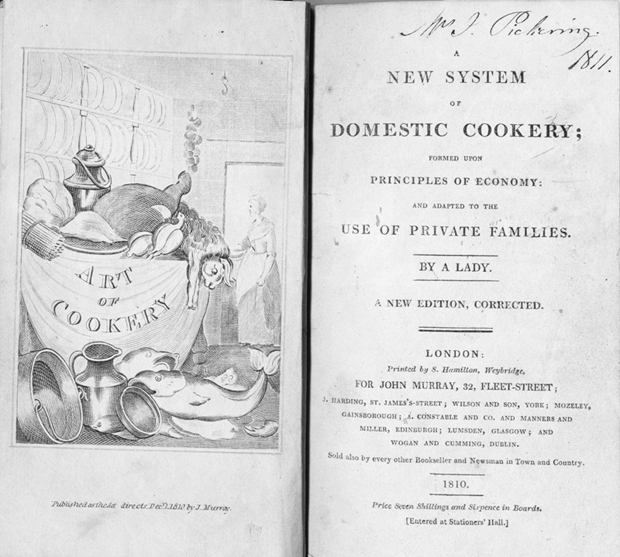
As mentioned, meat of all types was stored in barrels and placed in root cellars. Found in the New System of American Cookery Found Upon The Principles of Economy, 1807-By A Lady:

"Chop fat and lean pork and season it with sage, black pepper and salt, you may add two or three pimentos. Half fill hogs guts that have been soaking and made extremely clean; or the meat may be kept in a very small closely covered pan, and so rolled and dusted with a very little flour before they are fried. Fowls, including pigeons, are trussed, plucked, gutted and either roasted or boiled. It was then cooled and put into a barrel, covered with melted fat and a lid in the root cellar. "

Here is an old recipe for pickling cucumbers.

"Use small cucumbers and place in a pan with salt and water, strong enough to bear an egg. Pickle them for a day, drain and place back into a pot with vinegar, mace, cloves, nutmeg, peppercorns, races of ginger and long peppers. Simmer, without boiling, until green all the way through. Cool and tightly cover, storing in the root cellar.

To Collar beef. Soak beef in ham brine for a couple days then dry it. Roll it into a hard collar with salt and ppepper, tie it tightly and soak in fat or wine before handing it down into the cellar."


My, how times have changed! My children now would never eat the way our forefathers did. Their favorite item on the fast food restaurants menu? The pickles! I can't even buy store bought pickles anymore because they love these sour circles.


Thin Sour Dill Pickle Slices

1 1/2 cups water
1 1/2 cups apple cider vinegar or white vinegar
2 tablespoons pickling salt
2 teaspoons sugar
2 teaspoons garlic powder
2 pounds pickling cukes *
2 teaspoons dill seed
1 tablespoon peppercorns

In a saucepan, add water, vinegar, salt, sugar and garlic powder. Bring to scalding, whisking well. over medium heat. When spices have dissolved, remove from heat to cool to room temperature.

Slice the cucumbers as thinly as possible, I used a mandolin to mimic the fast food pickles, only because that is what my children wanted.

Place the dill seeds and peppercorns in a large bowl, followed by the sliced cucumbers. Pour the pickling juice over the top. Make sure you have enough to cover. Grab a couple heavy, large plates that is able to fit inside the bowl yet cover as much of the pickles as possible. This will keep the pickles submerged. Place a kitchen towel over the bowl, making sure it doesn't touch the liquid, and set aside. Let cucumbers sit in the brine for 8-9 days, tasting after 7 to halt the brining process at your preferred taste level.

Skim any foam that may rise on a daily basis. The liquid will become cloudy, but that is what you want. When ready, transfer pickles to jars with lids and there you have it.

* Or the same weight in a long, thin English cucumber.